
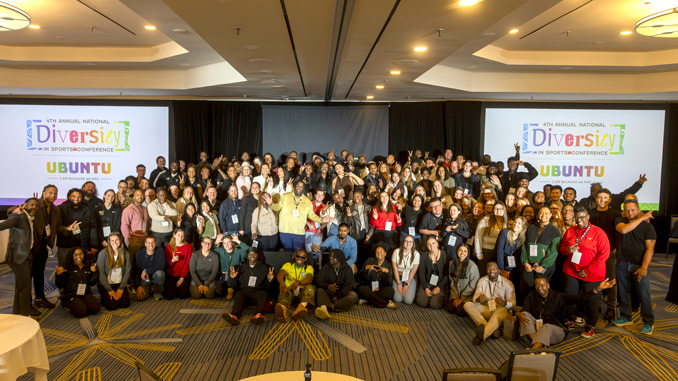
The Inclusion in Canadian Sports Network (ICSN) reflects on the success of its 4th Annual Diversity in Sports Conference (DISC 2026), held from May 1–3, 2026 at the Hilton Mississauga Meadowvale.
Over the course of three days, DISC 2026 brought together leaders, athletes, coaches, researchers, and changemakers from across Canada and beyond for meaningful dialogue, shared learning, and collective reflection on the future of sport. As the conference continues to grow, so too does its impact—creating a space where critical conversations are not only encouraged, but necessary.
Throughout the weekend, award-winning journalist Arash Madani guided the conference with clarity and intention, weaving together a program that reflected both the complexity of the sport system and the urgency of the work ahead.
Three Days of Dialogue, Reflection, and Action
The conference opened on Friday with sessions that immediately set a thoughtful and challenging tone. Dr. Sabrina Razack and Tiffany Donaldson led a powerful discussion rooted in the global controversy surrounding Brazilian footballer Vinícius Júnior, using the moment to examine how Black joy and self-expression in sport are often reframed as provocation, while racism itself is minimized. The conversation offered a critical lens on race, media narratives, and accountability within sport.
Building on this foundation, Victoria Wicks of the Canadian Queer Chamber of Commerce delivered a grounded and practical session highlighting systemic gaps in Canadian grassroots sport, calling on participants to move beyond awareness and toward meaningful accountability in their work.
Friday evening shifted toward storytelling and reflection, beginning with an RBC Training Ground fireside chat featuring Olympic bobsleigh pilot Cynthia Appiah. Moderated by Arash Madani, Appiah shared her journey of resilience and self-determination, including her decision to take control of her own path in sport by learning to drive the sled herself. Her story set a powerful tone that carried throughout the conference. The evening concluded with a screening of the Tigers Skate Club documentary—spotlighting a grassroots movement creating inclusive spaces for femme-identifying and non-binary skateboarders—followed by an opening networking reception.
Saturday marked the conference’s most immersive day, with concurrent workshops and dedicated programming that allowed participants to engage deeply across a range of topics. Facilitators from ISCA and Skateistan shared community-driven approaches to working with refugee and displaced populations through sport, emphasizing trust, co-design, and lived experience. Dr. Ryan Storr of Proud2Play (Australia) introduced a research-backed “Rainbow Roadmap” for advancing LGBTIQA+ inclusion within organizations, while Archie Allison of Variety Village provided practical tools for creating accessible environments across all abilities—reinforcing that EveryBODY belongs in sport.
The Emerging BIPOC Leaders (EBL) stream offered a parallel space for growth, mentorship, and honest dialogue. Sessions led by the CO-PLAY Network, Maame De-Heer, Dakota Whyte, and Dr. Sabrina Razack explored leadership, identity, and career development within the sport sector. ICSN President & CEO Shauna Bookal joined the EBL cohort for a candid mentorship session, offering insight into leadership at the national level and encouraging emerging leaders to step confidently into their roles.
Later in the day, the full conference reconvened for a Sport for Life plenary that brought together Indigenous Ways of Knowing and newcomer-focused practices, reinforcing that conversations around equity, diversity, and inclusion are inseparable from broader human experiences. The Brock University SAIL Lab closed the day with the introduction of the READII framework—Representation, Equity, Accessibility, Diversity, Inclusion, and Integration—providing a practical tool for examining bias and fostering more inclusive sport environments.
Saturday evening culminated in DISC’s signature Speed Networking Event, where participants connected across sectors in a dynamic and engaging format, extending the energy of the day into meaningful new relationships.
Sunday’s programming continued to build on this momentum. Zechariah Thomas, founder of Swift Hockey, delivered a keynote that resonated deeply with attendees, sharing an unfiltered account of building a national brand without traditional pathways or resources. His message challenged participants to move with intention, embrace identity, and create opportunity rather than wait for it.
The conference also addressed critical issues related to safe sport. Lindsay Lobb of the Canadian Centre for Child Protection led an important session on the non-consensual distribution of intimate images affecting athletes, equipping attendees with practical tools and resources to better protect and support individuals within their communities.
DISC 2026 concluded with the annual awards ceremony, celebrating leaders and organizations driving meaningful change across the sport sector. The closing luncheon and final networking moments offered space for reflection, connection, and a shared commitment to continue the work beyond the conference.
A Movement Beyond the Conference
While DISC 2026 marked the end of a three-day gathering, it reinforced a larger and ongoing movement.
“This conference continues to demonstrate what is possible when we create intentional spaces for honest dialogue, shared learning, and collective action,” said Shauna Bookal, President & CEO of ICSN. “DISC is not just an event—it is part of a broader effort to transform sport in Canada into a system where everyone can truly belong.”
The conversations and insights from DISC 2026 echo the calls outlined in the Final Report of the Future of Sport in Canada Commission, which emphasizes the need for sustained, coordinated efforts to address systemic barriers in sport. DISC continues to serve as a platform where these conversations are brought to life—through people, practice, and community.
Looking Ahead
ICSN remains committed to advancing this work through its programs and partnerships, including the Diversity in Sports Conference, Black Leaders in Sports Day, and the Emerging BIPOC Leaders program. As momentum continues to build, the focus remains on translating dialogue into action and ensuring that the impact of DISC extends far beyond the conference space.

